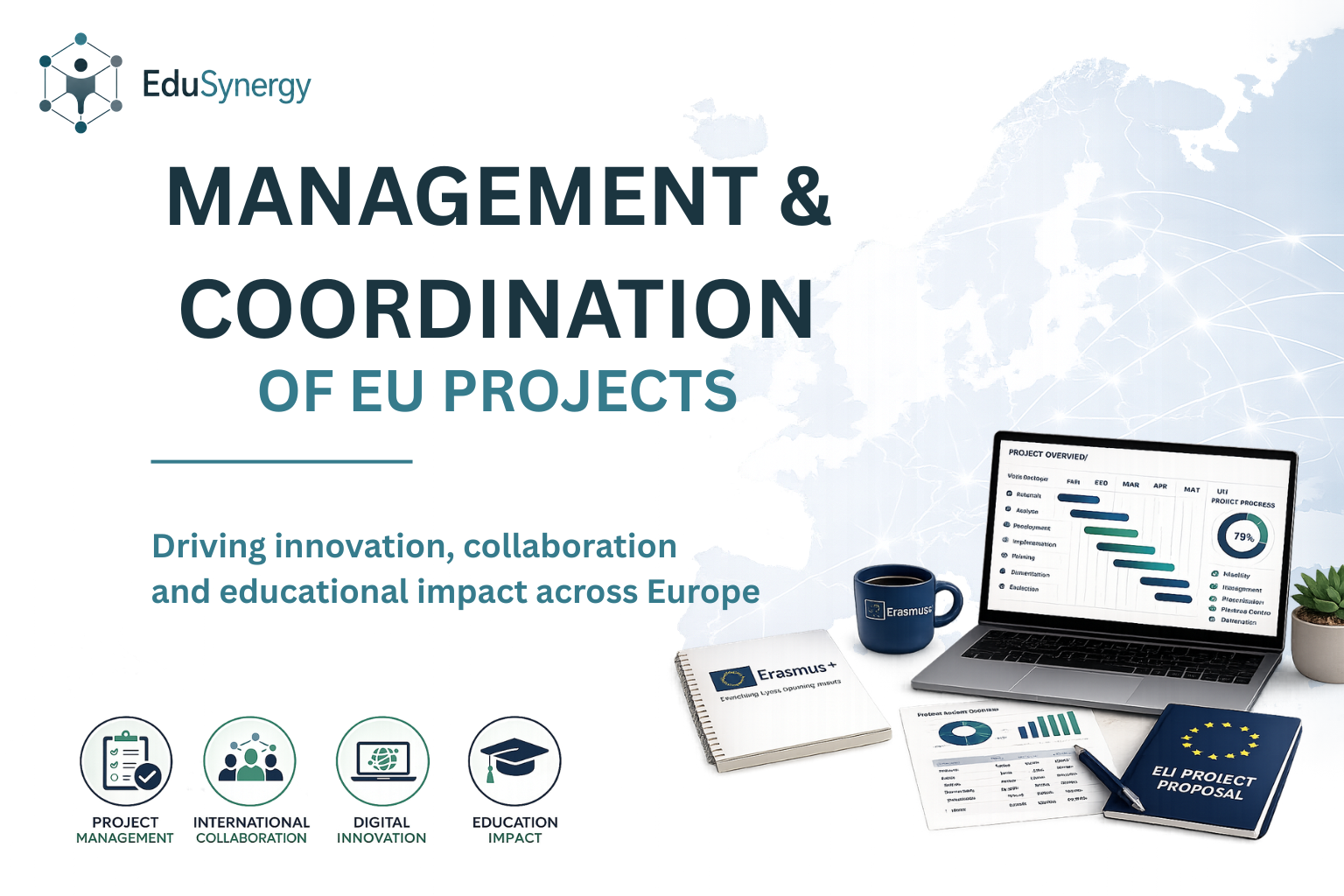
EU-funded projects have become a driving force for innovation, collaboration and knowledge exchange in the education sector. Programmes such as Erasmus+ enable schools, universities, non-profit organisations and research institutions to work together across borders, creating opportunities that improve learning experiences and strengthen international cooperation. However, behind every successful project lies effective management and coordination.
Project management in such initiatives goes far beyond administrative tasks. It involves setting realistic objectives, planning activities, coordinating international partners, monitoring budgets, ensuring compliance with funding requirements and delivering measurable results and deliverables.
Project coordinators must maintain clear communication, oversee timelines, manage risks and ensure that every partner contributes effectively to the consortium’s goals. The European Commission also places significant emphasis on dissemination and the long-term impact of project outcomes, making communication and sustainability essential parts of successful management.
In recent years, the management of educational EU projects has evolved considerably. Modern projects are expected not only to deliver outputs, but also to demonstrate social value and create lasting impact. Digital transformation has become a central priority, encouraging organisations to adopt online tools, virtual learning environments and innovative educational technologies.
At the same time, accessibility and inclusion have gained greater importance, ensuring that educational opportunities are available to diverse groups of learners regardless of their background or abilities. Sustainability and environmental awareness have also become key considerations in project planning and implementation.
Another significant change is the increased focus on collaboration between organisations from different countries and sectors. Successful partnerships require strong communication, mutual trust and clearly defined responsibilities. Coordinators must balance cultural differences, legal requirements, financial management and reporting obligations, while keeping all partners aligned with the project’s objectives. This makes leadership and organisational skills just as important as technical expertise.
The Erasmus+ programme further encourages innovation by supporting projects that exchange best practices and develop new educational approaches. These initiatives often focus on digital skills, lifelong learning, inclusion and strengthening institutional capacity. As educational systems continue to evolve, project managers are expected to be flexible and capable of adapting to emerging priorities and policy developments.
Despite these opportunities, managing EU-funded projects presents several challenges. Tight deadlines, complex reporting requirements, financial accountability and coordination among multiple and multi-national partners can create significant pressure. Effective planning, transparent communication and continuous monitoring are therefore essential to minimise risks and ensure successful project delivery.
Looking ahead, the future of EU project management in education will involve even greater use of digital tools, data driven decision making and cross sector collaboration. Organisations that embrace innovation, while maintaining strong coordination practices will be better positioned to maximise the impact of their projects and contribute to a more inclusive and resilient European education ecosystem.
At EduSynergy, we believe that effective project management and coordination can support innovation and collaboration in the education sector. We promote knowledge exchange, capacity building and international cooperation and contribute to the development of modern educational practices and the successful implementation of European projects.
In a rapidly evolving educational environment, our vision is to help institutions adapt to new challenges while fostering inclusion, digital transformation and sustainable impact across Europe.