Smart systems are becoming part of everyday professional life and recent changes in European AI policy underline a point that is easy to overlook: understanding these technologies is no longer relevant only to engineers and technical specialists.
Article 4 of the EU AI Act has required providers and deployers of AI systems to support the AI literacy of their staff and other people involved in operating or using those systems since February 2025. Following amendments that entered into force in July 2026, national market surveillance authorities began supervising and enforcing these requirements from 2 August 2026. The European Commission’s wider Apply AI Strategy also identifies “AI literate workers for all sectors” as one of its priorities.
The message is clear. As smart technologies move into more workplaces, the ability to understand and use them is becoming a broader professional skill.
What do we mean by smart systems?
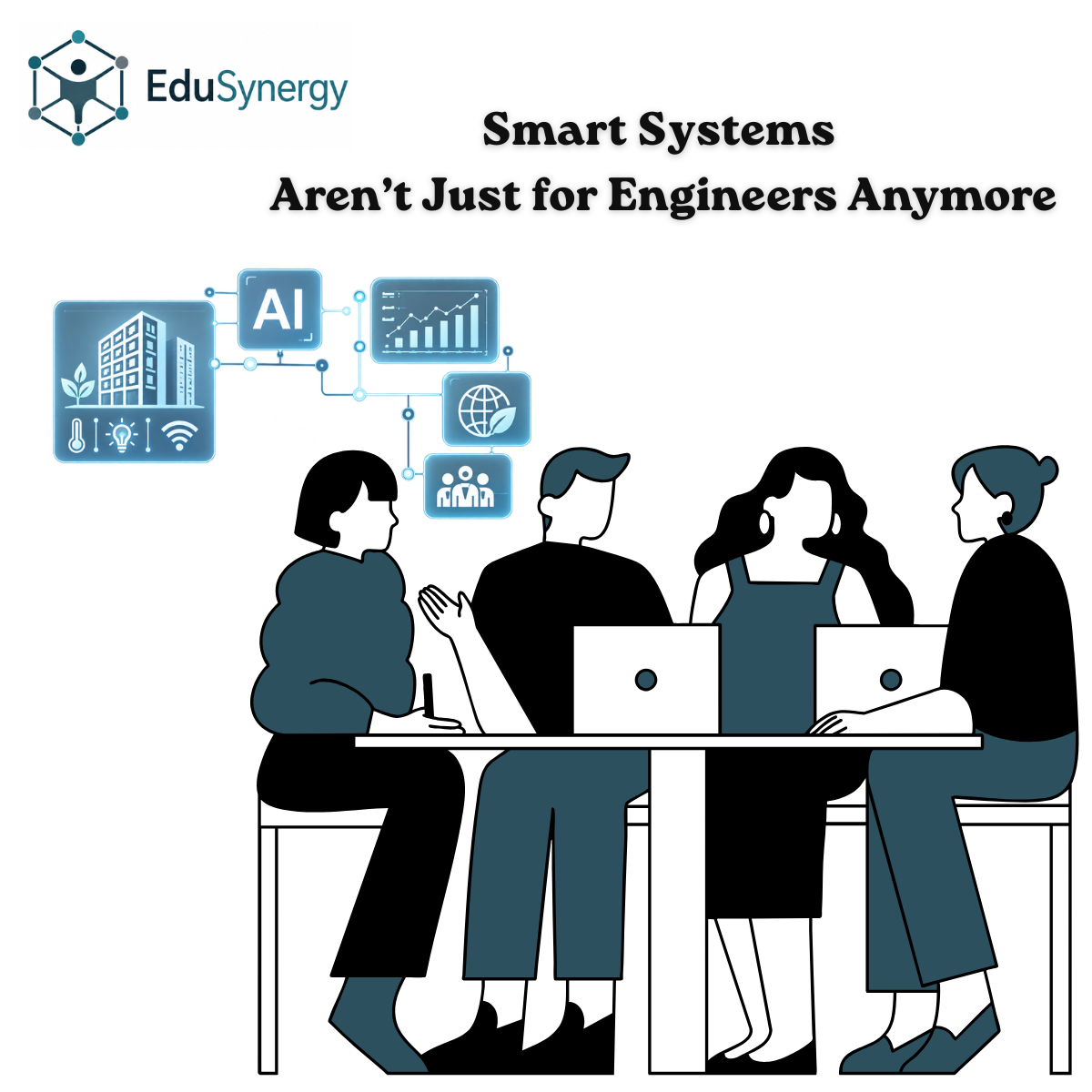
The term can sound highly technical but the basic concept is accessible. Smart systems bring together technologies, such as artificial intelligence, the Internet of Things (IoT), automation and data analytics to collect information, identify patterns and support decisions or actions.
A smart building, for example, can use connected sensors to monitor energy consumption. An AI-supported system can help a professional analyse information or identify patterns in large datasets. Connected devices can also provide real-time information that helps organisations manage resources more effectively.
The people using these systems do not necessarily need to design the underlying technology. What they need is an understanding of what the system can do, how to interpret its outputs and where its limitations lie.
Cyprus has a skills challenge to address
The issue is particularly relevant in Cyprus. The European Commission’s 2026 Digital Decade Country Report describes a country with strong digital foundations, while noting that business adoption of AI remains slow. It also highlights continuing differences in digital skills linked to factors such as age and level of formal education.
This creates an important distinction between having access to technology and having the skills to use it effectively.
For organisations, digital transformation involves more than recruiting technical specialists. Managers, finance professionals, educators, administrators and other employees may all encounter AI-powered or connected systems as part of their work.
They do not all need to become programmers. They do, however, need enough digital and AI literacy to ask the right questions, provide the most correct prompts, assess information critically and use technology responsibly.
Why non-technical professionals matter
Consider a manager using AI-supported analysis to identify operational trends, a finance professional working with AI and connected data as decision-support tools or a facilities manager using sensors to monitor energy use.
In each case technical expertise may sit behind the system. But the person making use of the technology brings something equally important: knowledge of the organisation, the sector and the decision that needs to be made.
This is why AI literacy needs to extend beyond technical departments. The European Commission’s Apply AI Strategy specifically promotes sector-focused AI literacy training and targeted upskilling and reskilling for workers, alongside the development of more specialised AI experts for digitally intensive sectors.
The result is a broader understanding of digital skills. Knowing how technology works can be valuable, but knowing when and how to apply it in a particular professional context is becoming just as important.
Turning technology into workplace capability
This is where practical training can bridge the gap between technological development and everyday professional use.
EduSynergy’s current training portfolio includes programmes that introduce business leaders and managers to the practical use of AI and IoT for sustainable environments and smart operations management, without requiring a technical background. The training also includes AI and IoT as decision-support tools for professionals in finance, audit and compliance.
That approach reflects a wider shift in professional learning. Instead of treating advanced technology as something that belongs exclusively to specialist teams, training can help professionals understand how it relates to the work they already do.
For example, understanding connected data can help a manager evaluate operational performance. Understanding AI-supported decision-making can help a finance professional consider new ways of analysing information. Understanding the limitations of AI can help any employee recognise when human judgement remains essential.
The next generation of digital skills
The conversation around smart systems is, therefore, becoming less about who can build the technology and more about who can work effectively with it.
For professionals, this means adding AI literacy and digital confidence to existing sector expertise. For organisations, it means considering technology skills as part of wider workforce development, rather than limiting them to IT teams.
Smart systems may be created by engineers and technology specialists, but their effectiveness depends on the people who use them. As AI, IoT and automation continue to move into different sectors, the ability to understand these technologies and apply them thoughtfully will become an increasingly practical part of modern professional life.